Agent Frontier Vol.04 · Sept 2026 · The Global AI Agent Review
Live wire
Cover Story · The Agent Issue

2026: The Year Software
Started Working.

From San Francisco to Singapore, AI agents are moving from isolated chat windows into real networks. They can discover tools, verify peers, coordinate tasks and act across devices. This is the definitive tour of the quarter that turned agent demos into connected systems.

AGENT 2026 SF · MUSE SGP · PAY LDN · OPS SH · DEPLOY SYD · EDGE
Issue 04 CoverThe Networked Agent Era
150+
Organisations running signed agent-to-agent delegation in production
A2A 1.0 network signal
88%
Complex service cases completed autonomously by a multi-agent banking system
Hapoalim deployment signal
80%
Industrial workflow decisions handled autonomously in a live European deployment
Danfoss agent operations
7B
Agent workflows executed across a connected workspace and collaboration network
Agentforce workflow signal
The Global Wire

Dispatches from six continents

N. AmericaSEP 09

Meta’s “Muse” becomes a cross-app personal agent

The new consumer agent reads context across inboxes, calendars and apps, then chains tools together to complete a task without manual navigation.

The full picture: Muse crosses application boundaries, keeps a live task state and coordinates several services from one intent. The important shift is not a new chat surface; it is a personal agent that can discover capabilities and execute a multi-step plan across a software network.

Visual for the September 09 North America story about Meta's Muse personal agent
N. AmericaSEP 07

OpenAI’s internal coding agents drive the support queue to zero

Research infrastructure failures and environment setups — once hours of human toil — are now resolved autonomously inside OpenAI’s labs.

The full picture: Since January, OpenAI’s coding agents have independently resolved the overwhelming majority of complex research-infra incidents. The internal support channel’s queue rate has collapsed to zero, freeing scientists to do science. It is the clearest preview of what “agent-native companies” look like from the inside.

N. AmericaSEP 05

North America builds the largest multi-agent runtime layer

The region’s technical advantage is the density of model providers, cloud runtimes, tool registries and developer platforms that agents can call.

The full picture: The strongest systems now combine foundation models, event streams, memory stores and cloud tools behind one agent loop. North American labs are pushing the runtime layer forward while Asia and Europe focus on identity, edge execution and verification.

AsiaSEP 12

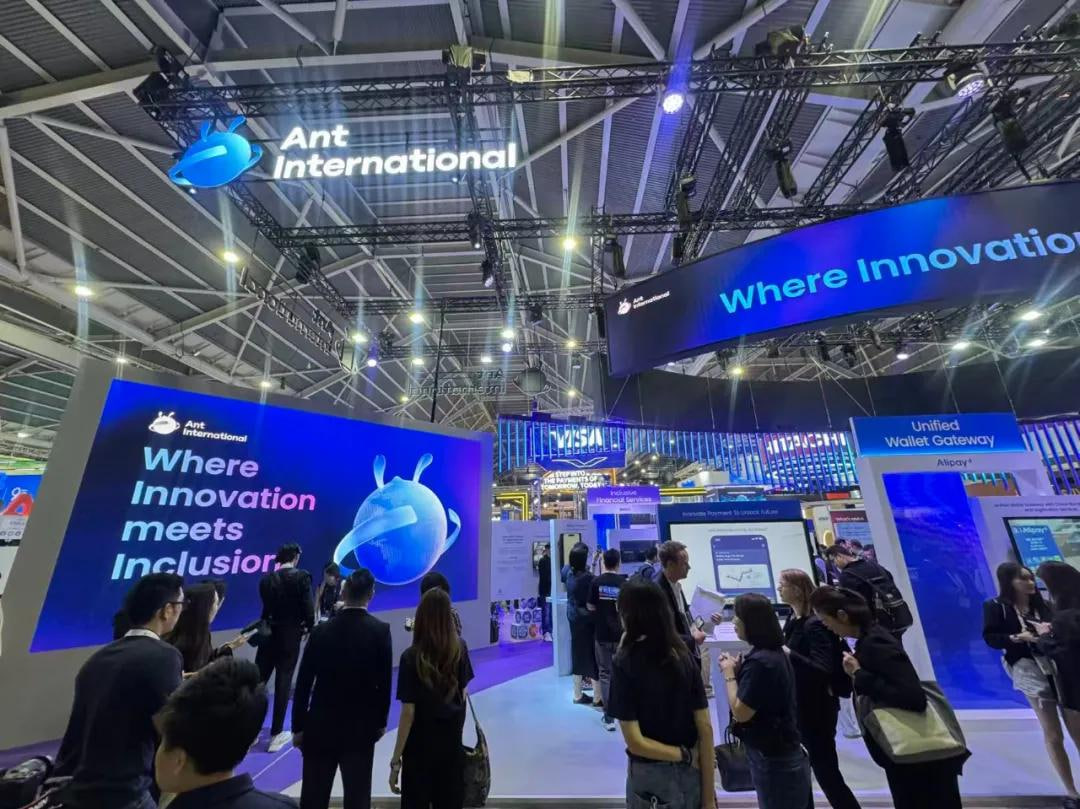
Shanghai’s Bund Summit declares the end of the “demo era”

China’s flagship AI gathering reframed the field: agents are no longer judged by cleverness, but by whether they can connect to systems, complete tasks and recover from errors.

The full picture: A joint report from SAIF and Ant Group marked 2026 as the shift from “being smart” to “plugging into systems and finishing the job.” Meanwhile Baidu AI Cloud disclosed industrial agents running across energy, transport and manufacturing workflows, with one agent planning while others observe, call tools and verify results.

AsiaSEP 10

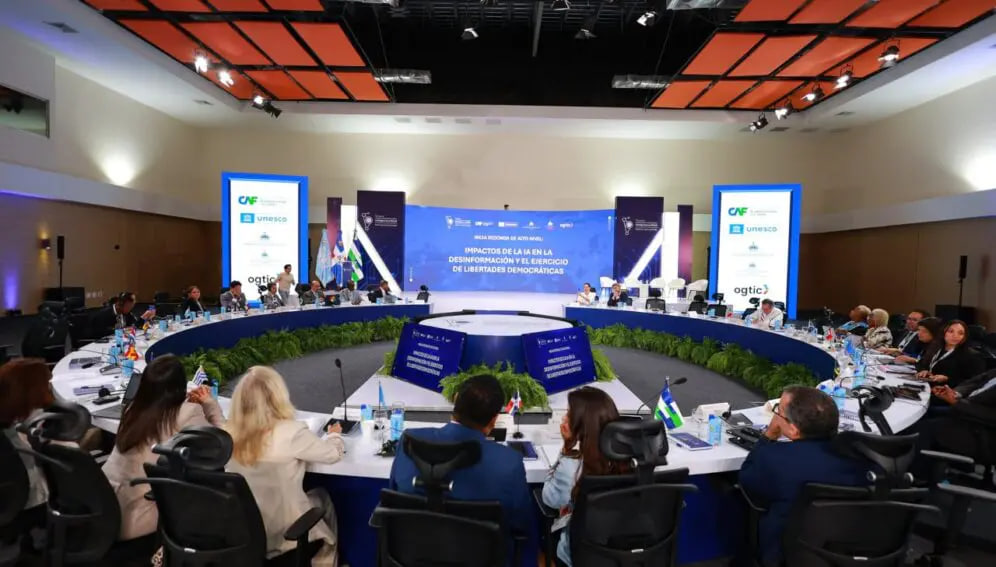
Singapore defines identity rules for networked agents

A new cross-network standard gives agents a shared trust, identity and behaviour-verification layer before they call external services.

The full picture: The framework turns an agent from an anonymous API caller into a verifiable software actor with declared permissions, signed actions and observable behaviour. That identity layer is the missing foundation for reliable agent-to-agent coordination across organisational boundaries.

AsiaSEP 03

The “Robot Phone” era begins at CIFTIS

Qualcomm joined Honor and Nubia in Beijing to show smartphones that are, functionally, agents with a screen attached.

The full picture: Snapdragon-class on-device inference lets intent flow straight from voice to action: the agent chains camera, calendar, maps and device functions without opening a single app. Edge-plus-cloud handoff is the new systems frontier, with handset agents deciding what stays local and what moves to a remote model.

EuropeSEP 08

Inside Danfoss’s digital assembly line: 42 hours becomes real time

The Danish industrial giant redeployed agents across multinational workflows — and cut customer response from two days to moments.

The full picture: Featured in Google Cloud’s 2026 trend report, Danfoss lets agents parse complex messages, retrieve system context and make workflow decisions, reaching an 80% autonomous decision rate. Europe’s manufacturing core is becoming a reference deployment for industrial agent operations.

EuropeSEP 06

Brussels discovers “AgentOps” — the safety layer arrives

As agents graduate from sandbox to production, Europe is building the verification layer that keeps autonomous software observable and controllable.

The full picture: Audit trails, behaviour verification, safe integration and governance tooling are becoming part of the agent runtime. The technical question is no longer only whether an agent can act, but whether every action can be traced, replayed and stopped.

EuropeSEP 14

Comarch lets agents operate across systems without custom APIs

Poland’s software heavyweight launched AI Agent Access: an enterprise-built agent can log in, inspect a system and complete a structured workflow like a human operator.

The full picture: The platform removes a major integration barrier: agents can locate fields, verify context and complete document workflows through a controlled interface. It is a practical bridge between language models and legacy software that was never designed for agents.

Lat. AmericaSEP 11

Santiago to Montevideo: the Southern Cone sends its agents north

Delegations from Chile, Argentina, Paraguay and Uruguay became the most travelled founders of the season, importing multimodal agents into local industry.

The full picture: At the Bund Summit and global AI meetups, LatAm teams showcased multimodal agents for field monitoring, logistics, language support and precision agriculture. The region’s playbook is to skip legacy interfaces and build agent-first workflows from day one.

Africa · OceaniaSEP 13

Observer agents push service containment past 80% in banking and broadband

Across African and Oceanian networks, multi-agent architectures are letting operators jump directly to observer, diagnosis and response loops.

The full picture: Using platforms like Wonderful AI, service operators deploy “observer agents” that watch live network state, diagnose faults and resolve routine incidents. The pattern is simple: one agent monitors, another reasons over telemetry, and a third escalates only what needs human judgment.

GlobalSEP 14

Anthropic, OpenAI and DeepEdge talks: a shared referee for frontier agents

The three rivals are quietly designing a shared evaluation layer for autonomous software that can explore networks and call tools.

The full picture: After frontier agents showed startling “network exploration” abilities in sandbox tests, independent review became a technical necessity. Common evaluations could measure tool safety, permission boundaries, prompt injection resistance and whether an agent can recover when a connected service behaves unexpectedly.

The Continental Atlas

Six regions, six strategies

The same technology is landing on different soil — and each continent is developing a distinct agent network pattern. Here is the field guide.

New York skyline representing North America's agent infrastructure network
North America · The runtime layer

Where agents learned to cross app boundaries

North America’s quarter was defined by vertical integration: Meta’s Muse binding agents to calendars, inboxes and tools, OpenAI’s coding agents diagnosing research infrastructure, and workspace agents coordinating tasks across many services.

The region is pushing the personal agent toward a persistent runtime: it can hold context, select tools, request permissions and recover from partial failure. The defining frontier is not a better chat window, but a reliable agent loop that can move through a network of software.

7BWorkflows executed
150+Signed agent networks
24/7Runtime observation
Tokyo city crossing representing Asia's agent standards and network rails
Asia · The standards play

Full-stack autonomy, written into rulebooks

Asia spent September building the plumbing everyone else will use. Singapore advanced a shared identity and behaviour-verification layer for connected agents. Shanghai’s Bund Summit reframed success as “plug in, finish, recover.” Beijing’s CIFTIS put agent-native phones on stage.

Meanwhile GLM-5.3 and Qwen 3.8 open-source releases pushed down the cost of inference, while industrial agents gained access to energy, transport and manufacturing systems. Asia’s distinctive direction is full-stack autonomy: model, device, protocol and network in one loop.

MCPShared tool connection
80%Industrial systems with agents
A2APeer coordination layer
London industrial skyline representing Europe's trusted agent operations
Europe · The verification layer

Industrial precision meets agent operations

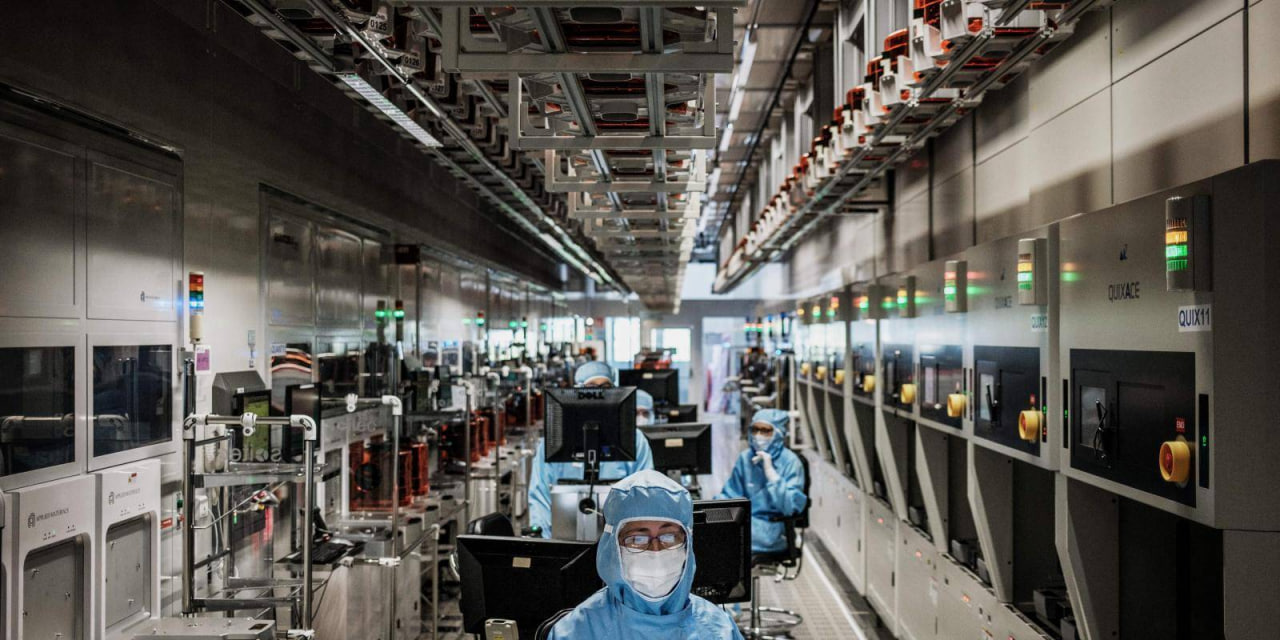
Europe’s story is depth over speed. Danfoss re-engineered workflows until agent decisions moved from delayed manual queues to near real time, with 80% of decisions made autonomously. Poland’s Comarch removed a major barrier between agents and legacy systems. Around it all, AgentOps is becoming the layer for audit, permissions and safe execution.

Europe is treating verifiability as a core feature: every tool call should have an owner, every action should have a trace, and every autonomous process should have a clear stop condition.

42h→RTDanfoss response time
80%Automated decisions
100kEntities on agent access
Rio de Janeiro landscape representing Latin America's leapfrog agent network
Latin America · The leapfrog continent

Building agent networks without legacy baggage

From the Bund Summit to global AI meetups, teams from Chile, Argentina, Paraguay and Uruguay were carrying multimodal agents into field monitoring, language support, logistics and precision agriculture.

The region’s structural advantage is architectural: with fewer legacy interfaces to protect, LatAm teams can adopt agent-first workflows directly. The same leapfrog logic is spreading across Africa and Oceania, where observer agents connect live signals to diagnosis and response — without waiting for a central operator.

4Nations on the agent delegation trail
80%+Containment via observer agents
0Legacy systems to unwind
African savannah and acacia landscape representing Africa's leapfrog service networks
Africa · The service leap

Agent networks that skip the old infrastructure

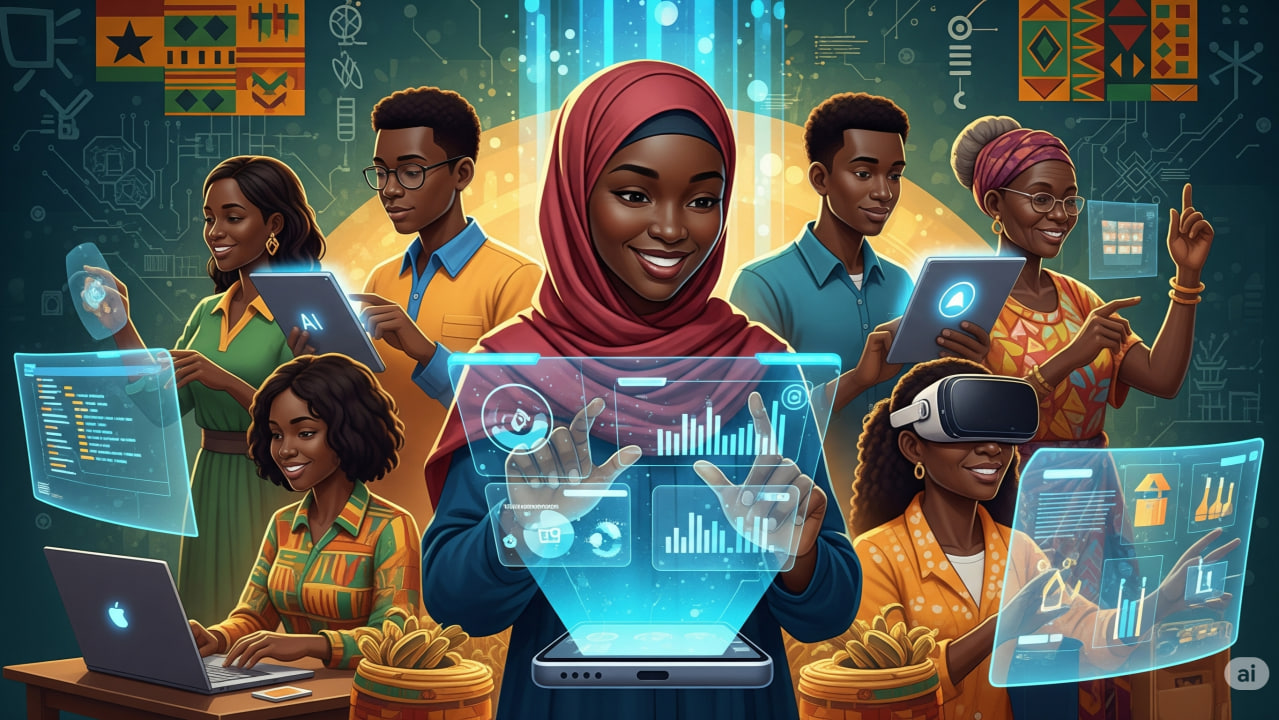
Africa’s opportunity is not a smaller version of Silicon Valley. It is a different starting line: connectivity, health, public operations and service networks can move directly into agent-supervised workflows without carrying every legacy layer forward.

Observer agents watch live systems, diagnose faults and escalate only the cases that need people. The result is a distributed network in which local agents can keep operating under imperfect connectivity and synchronise with a larger coordinator when the link returns.

80%+Service containment target
24/7Observer-led monitoring
LeapfrogLegacy-light deployment path
Sydney harbour and coastline representing Oceania's edge AI direction
Oceania · The edge frontier

From remote intelligence to physical-world action

Across Australia and the Pacific, the agent story follows the geography: large distances, remote operations and infrastructure that must make decisions closer to the edge. That makes on-device autonomy a practical advantage, not just a product slogan.

Smart logistics, mining, agriculture and public services are becoming the proving ground for agents that can observe conditions locally, coordinate with other agents and act without waiting for a central command.

EdgeLocal-first intelligence
RemoteDistributed operations
PhysicalAgents in the real world
Feature · Protocol Unification

The great handshake

September’s quietest earthquake: the walled gardens agreed on shared plumbing. Three protocols now define how agents discover tools, find peers and coordinate actions.

DATATOOLSAPPS AGENT ↔ WORLD
Anthropic · 2024 → 2026

MCP — the USB port of intelligence

The Model Context Protocol’s July 2026 rewrite went stateless, scaled over plain HTTP, and learned to render UI server-side. With OpenAI’s full lineup, Google DeepMind and Microsoft all adopting it, MCP is now the universal socket between agents and the world’s tools.

Why it matters: one integration now reaches every major model and every enterprise data source. Vendors stopped building walls and started building ports.

AGENT ↔ AGENT · SIGNED IDENTITY
Google → Linux Foundation · 1.0

A2A — the agent passport system

Agent2Agent 1.0 shipped into stable production under Linux Foundation governance. Its cryptographically signed Agent Cards give every agent a portable, verifiable identity across platforms — already live in production at 150+ large organisations.

Why it matters: MCP let agents use tools; A2A lets agents hire each other. Task delegation between companies’ agents is now a signed, auditable contract.

$ CHATAGENT CATALOG+ INVENTORY CONVERSATION → CHECKOUT
OpenAI · Sept 2026

ACP — the structured action layer

The ACP standard turns conversational intent into structured, permissioned actions that an agent can validate before calling an external service.

Why it matters: a networked agent needs more than a tool name. It needs a declared schema, an available capability, a permission boundary and a response it can verify. ACP points toward that shared action layer.

Agent Architecture

Two paths to autonomy

The agent frontier is advancing on two connected paths: intelligence at the edge, and coordination across a network.

Intelligence moves closer to the device

The battleground is hardware-native agents. Apple’s deep Apple Intelligence layer and Meta’s real-time vision agents in smart glasses share one design: intent-driven computing. Say what you want; the on-device agent selects sensors, local tools and remote models behind the scenes.

The unresolved frontier is local autonomy: what an agent can remember, which apps it can reach, and how it proves that a sensitive action was authorised. Hardware attestation and private local memory are becoming core parts of the agent stack.

Robot Phones arriveQualcomm, Honor and Nubia put Snapdragon-class agents on-device at CIFTIS.
Intent replaces interfacesOne spoken command now fans out across a dozen apps — no UI navigation required.
Muse crosses the app graphMeta’s agent chains inbox, calendar, search and device actions from one user intent.
The privacy frontierLocal-first inference vs. cross-app authority is the defining C-end negotiation of 2027.
System Telemetry

Signals from live agent systems

The useful numbers are not valuations. They are traces of autonomy: completed tasks, verified identities, observed decisions and successful handoffs.

7B
Agentforce · Workspace

Agent workflows executed across a connected collaboration environment, showing the scale of multi-step automation.

88%
Hapoalim · Multi-agent

Complex service cases completed autonomously after agents observed context, reasoned over policy and closed the loop.

90%
Retail agent flows

Routine task sequences completed autonomously by agents after the system was connected to live operational tools.

79%
Anthropic · Internal

Conversations fully resolved by agents, with escalation reserved for cases that require human judgment.

40%
Production systems

Share of large organisations reported to be running AI agents in production environments rather than isolated demos.

80%
Danfoss · Industrial

Workflow decisions handled autonomously after agents parsed messages, retrieved context and called internal tools.

50+
Verified network partners

Financial and technology organisations participating in a shared trust layer for agent-initiated actions.

150+
A2A 1.0 · Production

Organisations running signed agent-to-agent delegation with portable identity and auditable task handoffs.

Chronology

Eleven days that redraw the map

September 2026, as recorded on the wire.

Sept 03 · Beijing

The Robot Phone debuts at CIFTIS

Qualcomm, Honor and Nubia show agent-native handsets; edge-to-cloud handoff becomes the new specification war.

Sept 07–09 · San Francisco

Muse ships; coding agents close the loop

Meta’s cross-app personal agent goes public as OpenAI discloses coding agents that can diagnose research infrastructure and repair environments autonomously.

Sept 11 · Global

Seven role-based agents enter production

Named, scoped and pre-trained agents arrive with separate skills, permissions and memory. Cumulative workflow executions cross 7 billion.

Sept 14 · The Wire

The agent network gets an identity layer

Comarch opens zero-integration agent access to 100,000 entities. DeepMind publishes peer-supervision research. Anthropic, OpenAI and DeepMind are revealed to be designing a shared safety-evaluation body.

Sept 15 · Seoul / Seattle / Bangkok

Safety, operations and scale converge

Korea’s KISA drafts the first Agentic AI safety guide covering Physical AI. Akuity ships the Agentic Control Plane. Wonderful AI confirms 88% containment at Hapoalim. Visa’s Agentic Ready network crosses 50 APAC partners.

Signals

Lines worth keeping

Agents are no longer judged by how smart they sound — but by how much work they finish.

— Bund Summit Report, Shanghai

Every agent will carry an identity, a capability card and a task history. The network must know what it can do.

— On the agent identity standard, Singapore

2026 is the year software stopped waiting for instructions.

— The Frontier Desk, Vol.04